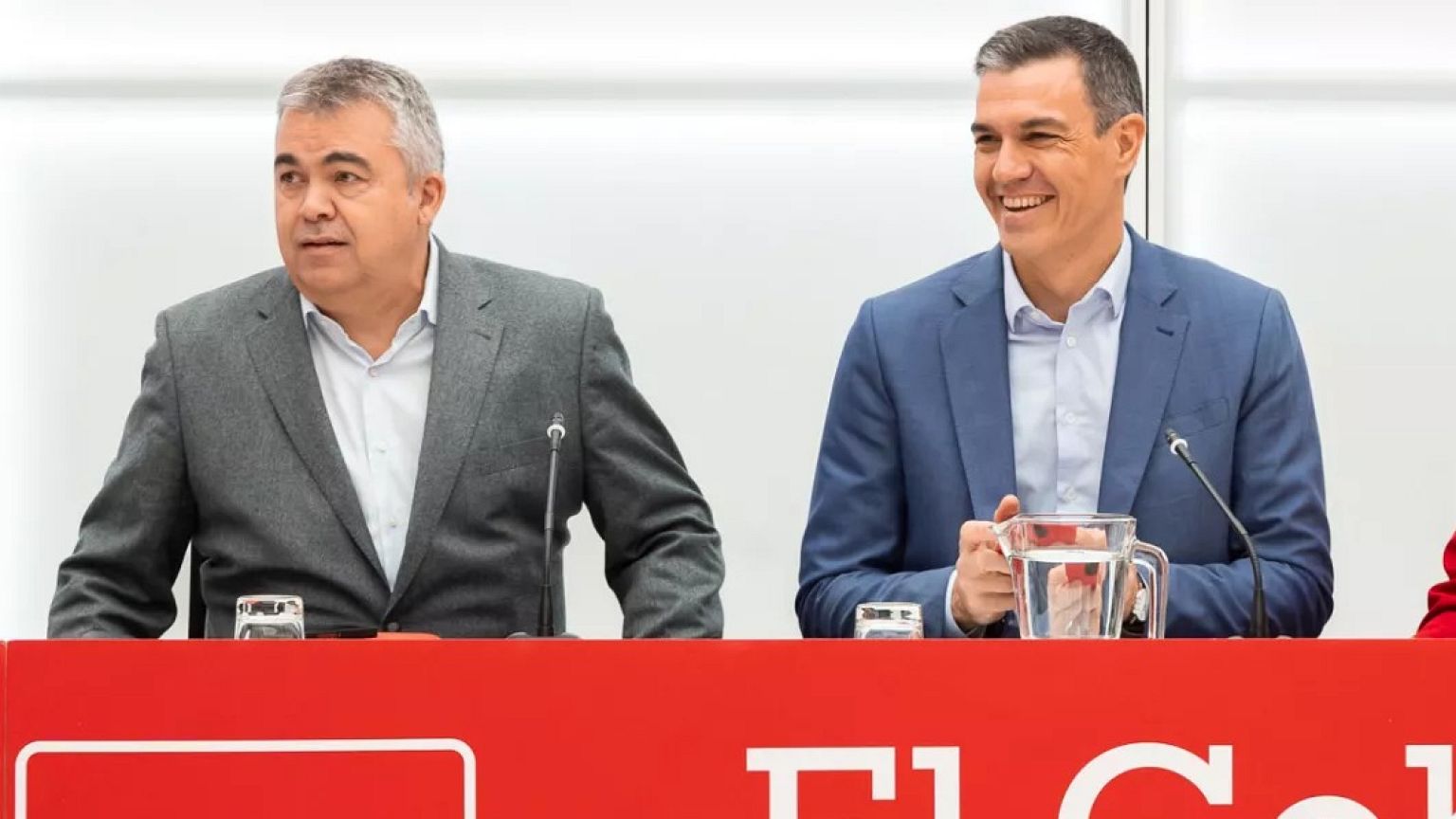
The Spanish Prime Minister, Pedro Sánchez, is confronting the most challenging political crisis of his time in office. An incriminating document from the Guardia Civil’s Central Operative Unit (UCO) has connected significant officials of the PSOE to a massive bribery setup involving government contracts and corporate payouts. As this probe involves the party’s senior leadership, Sánchez is becoming more isolated—not just because of the scandal but also due to the rising number of corruption issues involving his own relatives.
The UCO Report: A Direct Line to the Party’s Core
The UCO report identifies a network of illicit payments orchestrated by Santos Cerdán—until recently, Secretary of Organization of the PSOE—and executed through figures close to former minister José Luis Ábalos. According to the report, construction giant Acciona paid at least €620,000 in bribes in exchange for favorable treatment in public tenders, with another €450,000 in pending payments connected to ongoing contracts.
Importantly, the UCO describes how these activities were not on the periphery but were orchestrated from the core of the party’s hierarchy. The corruption was not a coincidence—it was entrenched.
A President Surrounded
As the discoveries by the UCO capture the media’s attention, Sánchez is concurrently dealing with another two incidents, both concerning members of his close relatives:
- Begoña Gómez, su esposa, está siendo investigada formalmente por presunto tráfico de influencias, malversación de fondos públicos y corrupción en los negocios. La investigación se centra en su papel al promover empresas privadas desde su puesto universitario, que supuestamente recibieron un trato favorable del gobierno.
- David Sánchez, el hermano del Primer Ministro, enfrenta juicio por prevaricación y tráfico de influencias relacionado con un puesto creado para él dentro de la Diputación de Badajoz. Las autoridades judiciales afirman que el puesto fue diseñado específicamente para él, omitiendo procedimientos competitivos y justificado solo por conveniencia política.
Institutional Decline and Political Consequences
As Sánchez persistently tries to separate himself from these controversies, the political repercussions are hard to overlook. Cerdán’s departure, who was once seen as one of Sánchez’s closest allies, has unsettled the morale within the party. At the same time, public confidence in government transparency has significantly decreased, with rival parties demanding a comprehensive parliamentary inquiry and, in certain instances, early elections.
Critics argue that the Prime Minister’s silence and repeated appeals to due process are no longer sufficient. The convergence of corruption cases—corporate, familial, and institutional—has created the perception that Sánchez is either unwilling or unable to control the misuse of public power around him.
A Story of Downfall
Pedro Sánchez crafted a significant portion of his political journey on commitments to ethical leadership, modernization, and democratic renewal. However, he now holds the distinction of being the inaugural leader in a democratic Spain to have both his spouse and brother facing judicial examination, while his closest political allies are accused of widespread bribery.
What seemed initially like separate incidents now resemble elements of a larger trend: public entities being used for individual and political advantage. Whether it is by assigning contracts to large companies, creating public positions for relatives, or using academic organizations to exert influence, the controversies now surround the presidency.
The UCO report has not merely exposed a corruption network—it has highlighted how deeply embedded it was in the machinery of the ruling party. Combined with the growing legal challenges faced by his wife and brother, Pedro Sánchez now leads a government overshadowed by suspicion.
The issue now is not about isolated criminal acts, but about whether an environment of privilege and self-preservation has prospered during his leadership. The upcoming weeks might reveal if Spain’s democratic structures can handle the crisis—or if internal corruption has weakened the system itself.