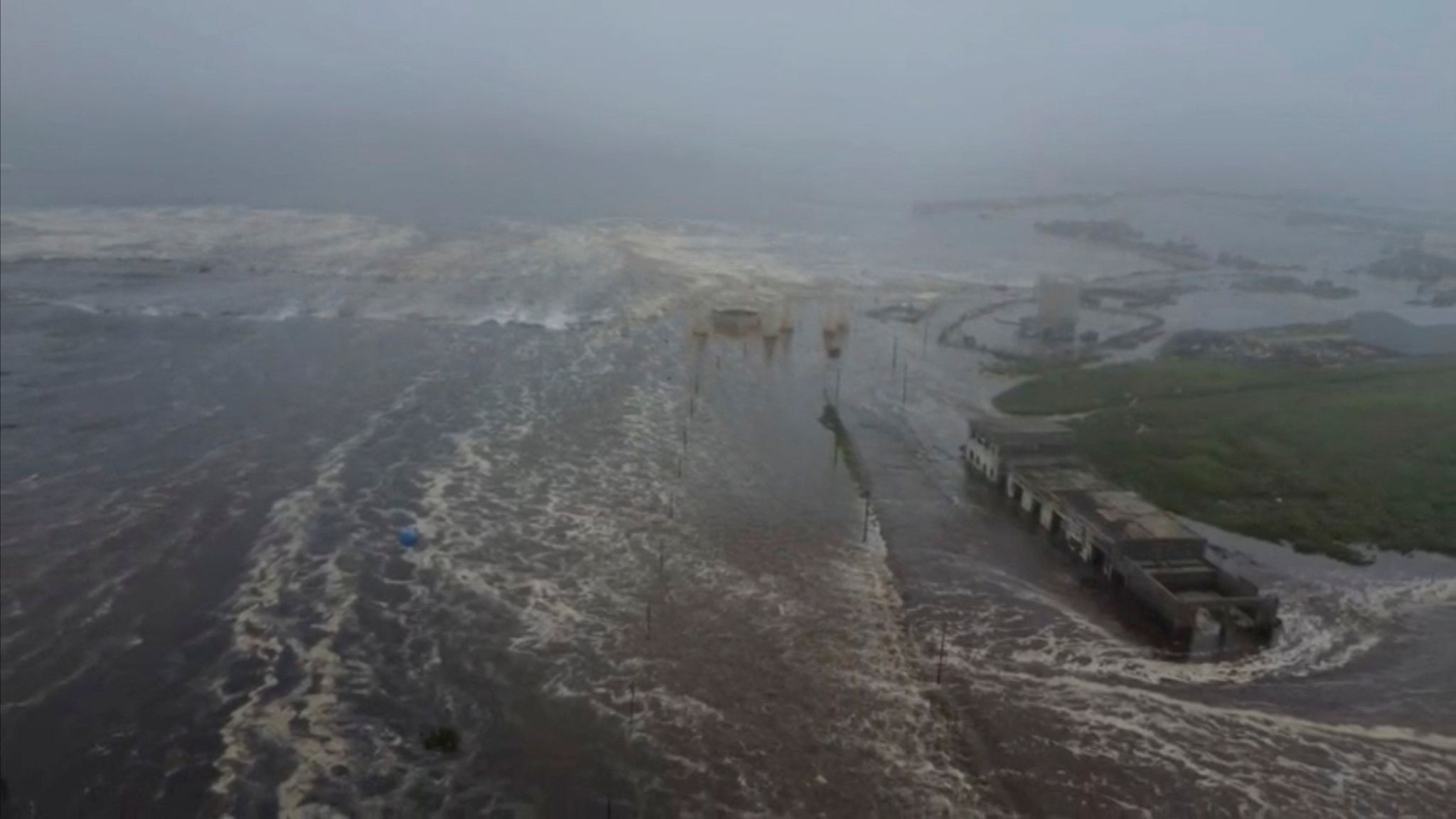
A significant undersea earthquake occurring off the eastern coast of Russia has sparked warnings of potential tsunami threats to parts of Japan and the United States. The seismic event, which registered a powerful magnitude, struck in the early hours local time and prompted rapid responses from meteorological and emergency agencies in multiple countries.
According to early reports from global geological observation institutions, the earthquake’s epicenter was located close to the Kuril Islands. This area, which lies between the Russian Far East and northern Japan, is prone to seismic activity. The earthquake struck at a depth often linked with subduction zones, which are notorious for generating the most hazardous tsunamigenic earthquakes.
Japanese authorities quickly issued tsunami advisories for coastal areas in the northern regions, including Hokkaido. Residents living in low-lying zones were urged to stay alert, monitor official updates, and prepare to evacuate if necessary. Similarly, the U.S. National Tsunami Warning Center evaluated the potential impact along parts of Alaska’s coastline and the U.S. Pacific territories, cautioning that tsunami waves could reach far-flung shores depending on the quake’s exact dynamics.
Although Russia has not reported any immediate harm or injuries, authorities have started reviewing coastal infrastructure and maritime activity following the earthquake. The quake’s magnitude, initially noted as over 7.5, sparked significant worries given the area’s past of producing tsunamis that travel across the ocean.
Emergency response mechanisms in Japan and the United States were set in motion shortly after the earthquake, highlighting the critical nature of prompt detection and readiness. Officials advised coastal populations to be aware of evacuation pathways and encouraged individuals to stay alert, even if the first wave activity seemed minimal. Historical incidents have demonstrated that tsunamis can move swiftly across the Pacific, occasionally requiring hours to reach shores but still inflicting considerable destruction upon arrival.
In Japan, known for its susceptibility to tsunamis because of its geographic location, regional authorities started preemptive evacuations in certain communities. Reports from the Japan Meteorological Agency suggested that the height of the waves would likely stay moderate, although it warned that local conditions might result in increased wave forces in bays or narrow channels.
Meanwhile, in the United States, tsunami watches were issued for parts of the Aleutian Islands and coastal regions of Alaska, areas historically vulnerable to seismic sea wave events. The National Oceanic and Atmospheric Administration (NOAA) stated that the situation was under active observation and that updates would be provided as new data became available from tide gauges and seismic sensors.
Tsunamis triggered by undersea earthquakes often cause widespread concern because their effects can span across multiple countries and continents. Even a modest wave height can lead to dangerous flooding, strong currents, and damage to ports, harbors, and infrastructure. Moreover, the psychological impact on communities with past trauma from tsunamis—such as the devastating 2011 Tōhoku disaster in Japan—adds urgency to even precautionary advisories.
Seismologists monitoring the event have emphasized that this earthquake is a reminder of the volatile nature of tectonic boundaries in the Pacific Ring of Fire. This belt, which encircles much of the Pacific Ocean, is characterized by intense geological activity, including earthquakes, volcanic eruptions, and ocean trench formation. The Kuril-Kamchatka arc, where the quake occurred, is a well-known zone of frequent seismic disturbances due to the subduction of the Pacific Plate beneath the Eurasian Plate.
Although predictions for tsunamis are growing in precision, a lot relies on the particular aspects of each earthquake, including its depth, how long it lasts, and the characteristics of the ocean floor disruption. In this case, preliminary computer simulations indicated the possibility of a tsunami forming, but more studies on wave patterns are required to assess the real danger to shores throughout the Pacific.
As the situation develops, international coordination between agencies such as the Pacific Tsunami Warning Center, the Japan Meteorological Agency, and regional emergency response teams continues to play a vital role in minimizing risk and disseminating timely information. Residents in the affected regions are being encouraged to rely on official sources and avoid the spread of misinformation through social media or unofficial channels.
Local agencies focused on disaster preparedness have seized the chance to emphasize to communities the crucial nature of planning for emergencies. Regardless of whether this situation leads to major effects on coastal areas, officials stress that being familiar with evacuation paths, keeping emergency supply kits ready, and understanding how to react to tsunami warnings are key elements of coastal resilience.
In the hours following the quake, no major wave activity had yet been reported on distant shores, though tide gauges were being monitored closely for any significant fluctuations. Some nations in the Pacific basin, including island territories with limited elevation, remain on high alert due to the unpredictable nature of tsunami propagation.
The event also reignites global conversations about the importance of earthquake early-warning systems and investment in coastal defense infrastructure. As ocean populations grow and climate change exacerbates the risks faced by vulnerable communities, preparing for low-probability but high-impact natural disasters becomes increasingly crucial.
While the earthquake off Russia’s coast may ultimately pass without major incident, the rapid and coordinated response underscores how far tsunami awareness and emergency systems have advanced in recent decades. It also serves as a stark reminder of the enduring power of Earth’s tectonic forces and the need for continued vigilance in regions where the land meets the sea.
Officials in Japan, the United States, and Russia are persistently keeping an eye on the situation. As fresh seismic and oceanic details come to light, they will provide updates. It is recommended that individuals in possibly affected zones stay updated, stay calm, and adhere to guidance from local authorities if additional measures are required.